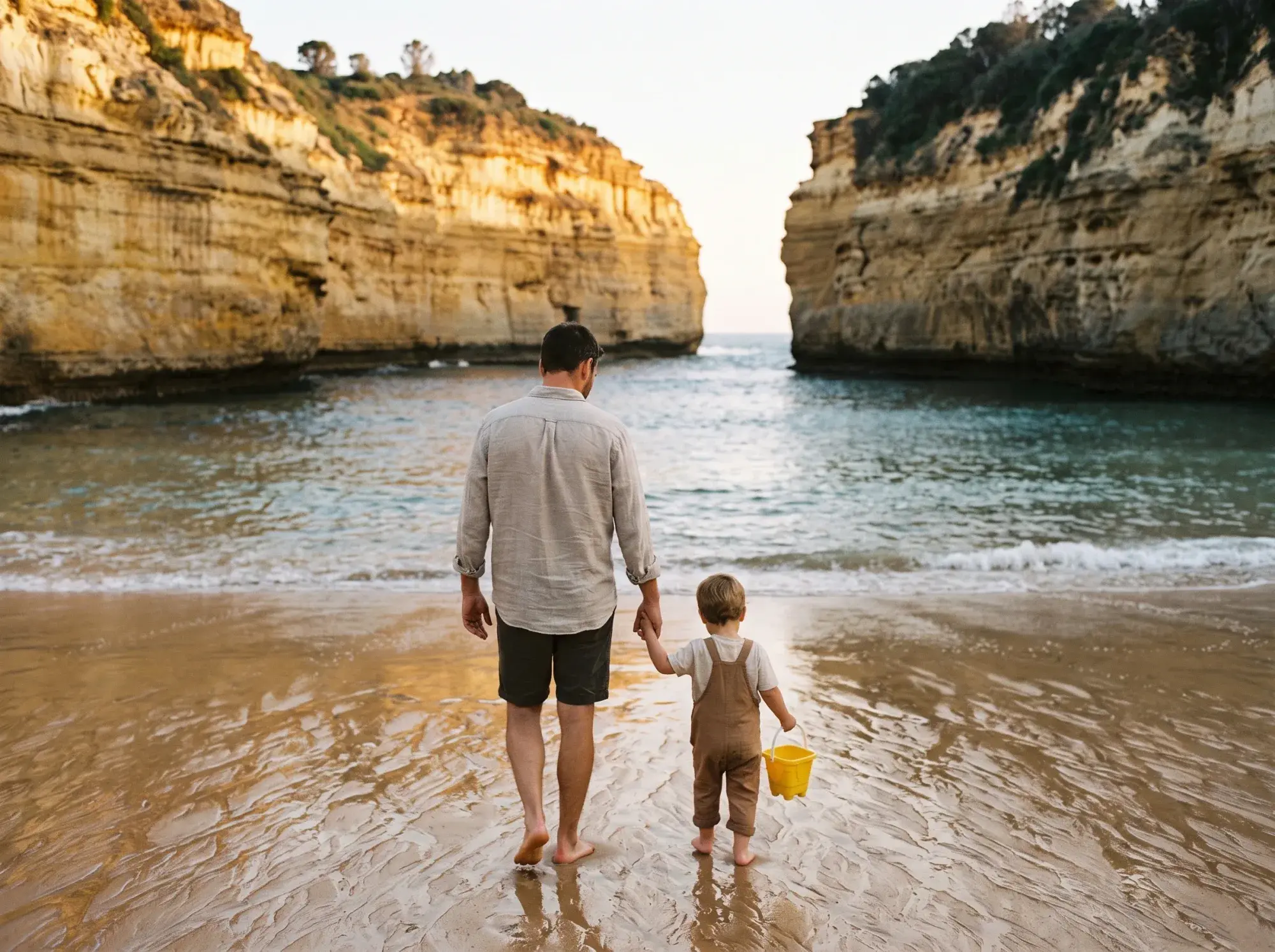
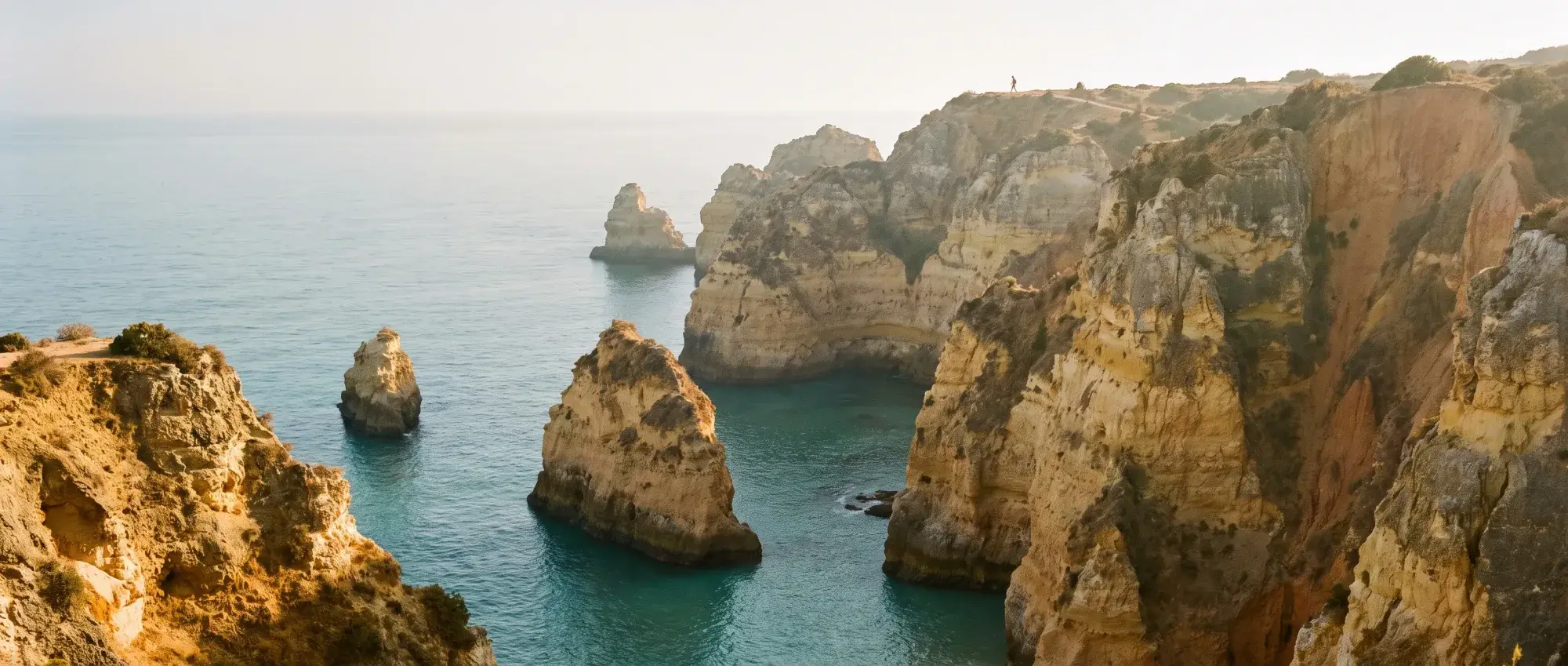
The resort coast of south Tenerife: sheltered beaches behind breakwaters, Siam Park, drier weather than the north and 16 minutes to the south airport. Also the most touristy and most expensive part of Tenerife. Research draft, not first-hand.

Region · Spain, Europe
Spain's Atlantic archipelago off north-west Africa: seven main islands, mild weather all year and same time zone as the UK. Visitors arrive in every month, so the choice is less when than where. Research draft, not first-hand.
For families
Opening hours, prices and age limits for each day out, with the date we read them. Beaches have their own access notes further down.

mean daily max 20.8–27.5 °C at Gran Canaria airport and 21.7–28.4 °C at Tenerife Sur airport (AEMET normals 1981–2010).
Loro Parque in Puerto de la Cruz and Siam Park in Costa Adeje (Tenerife), Poema del Mar aquarium in Las Palmas and Palmitos Park near Maspalomas (Gran Canaria). Details on the town pages.
Towns

The resort coast of south Tenerife: sheltered beaches behind breakwaters, Siam Park, drier weather than the north and 16 minutes to the south airport. Also the most touristy and most expensive part of Tenerife. Research draft, not first-hand.

Windy beach town in south-east Tenerife, 12 minutes from the south airport: kite and windsurf spots, grey-sand beaches under the Montaña Roja volcano and very few hotel beds. Research draft, not first-hand.

The flat, windy beach island of the Canaries: white-sand beaches and dunes in the north (Corralejo, El Cotillo) and the long Jandía beaches in the south, kite and windsurf all year, coworking mostly around Corralejo. Research draft, not first-hand.

The easternmost Canary Island: volcanic and dry, with three resort towns on calm beaches, a real capital in Arrecife and Manrique's lava-tube sights. Bases, family beaches, weather. Research draft, not first-hand.

The Canary Islands' biggest city, with a 3 km city beach, a decade-old coworking scene and spring-like weather in winter. A real city, not a resort: buses, markets, an old town. Research draft, not first-hand.

Gran Canaria's big resort coast: the dunes, Playa del Inglés, Meloneras and 63% of the island's hotel and apartment beds. Sunny, easy with children, busy and not a town with a life of its own. Bases, beaches, parks, one coworking. Research draft.

Old resort town on Tenerife's green north coast: black-sand beaches, Manrique's seawater pools, Loro Parque and two coworking spaces. Lower average room rates than Adeje in 2025, but cloudier. Research draft, not first-hand.

A small harbour village on Gran Canaria's south-west coast: a 209 m calm-water beach with lifeguards, canals, a Friday market and boats along the coast. Smaller than Maspalomas, but still a resort, and the far end of the line from the airport. Research draft.

The biggest Canary Island: a dry, sunny resort south, a greener and cooler north, Teide in the middle and two airports. Which side for families, work or winter sun, how touristy it is, weather and getting around. Research draft, not first-hand.
In detail
The Canary Islands are Spain’s Atlantic archipelago, about 100 km off the coast of north-west Africa. The coast stays mild all year, the islands keep UK time, and flights from most of Europe take four to five hours. That makes them the obvious winter base in Europe for remote work and for families. The catch is that everyone else knows this too: some of the coast is wall-to-wall resort, so the real decision is which island and which side of it.
| Base | Island | In one line | Page |
|---|---|---|---|
| Las Palmas | Gran Canaria | A real city (383,516 people in 2024) with a city beach (Las Canteras) and the islands’ best-known remote-work scene | Las Palmas |
| Puerto de la Cruz | Tenerife (north) | Established resort town on the greener, cooler north coast; Loro Parque, black-sand beaches, year-round residents | Puerto de la Cruz |
| Costa Adeje | Tenerife (south) | The sunniest, driest and most built-up coast: resorts, Siam Park, calm beaches for kids | Costa Adeje |
| El Médano | Tenerife (south-east) | Small windy beach town near Tenerife South airport; kite and windsurf, few hotel beds | El Médano |
| Lanzarote | Lanzarote | Flat, volcanic, windy; resort towns Puerto del Carmen, Playa Blanca and Costa Teguise, and César Manrique’s sights | Lanzarote | | Fuerteventura | Fuerteventura | Long beaches and dunes, the kite and surf island; Corralejo in the north, Costa Calma and Morro Jable in the south | Fuerteventura |
La Palma, La Gomera and El Hierro are quiet, green and good for hiking, with fewer flights.
Yes. They are an autonomous community of Spain, with two provinces (Las Palmas and Santa Cruz de Tenerife) and joint capitals in Las Palmas de Gran Canaria and Santa Cruz de Tenerife. They are in the EU and Schengen, but outside the EU VAT area: a local sales tax (IGIC, general rate 7%) applies instead.
Western European Time, the same as the UK, Ireland and mainland Portugal all year, and one hour behind mainland Spain.
For a working stay with city life, Gran Canaria (Las Palmas). For the widest choice of resorts and the warmest dry south coast, Tenerife (Costa Adeje, Los Cristianos). Lanzarote and Fuerteventura are smaller and windier and built more around beach holidays. Our comparison: Gran Canaria vs Tenerife.
Not in the usual sense: tourists arrive all year. In the twelve months to August 2026 the fewest arrived in May (1.28 million) and June (1.3 million), about a quarter fewer than in January and March (1.7 million each). Arrivals are not prices; we have no official monthly price series.